Logan Bennett · 2 September 2026
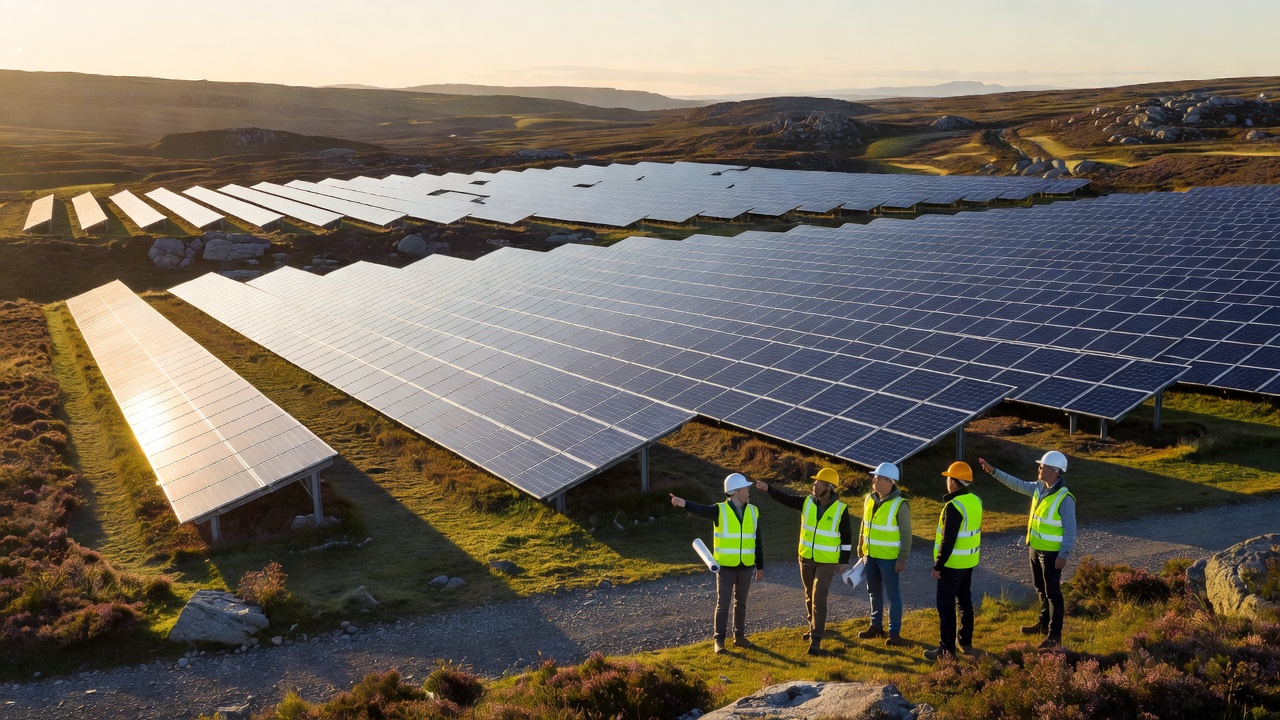
Scotland has approved the largest solar farm in its history, a landmark decision that advances the country's renewable energy targets. The project, developed by Sunworks Solar Developments, received planning consent from local authorities following extensive environmental assessments. Located in the Scottish Borders, the facility will cover 450 hectares and feature an installed capacity of 480 megawatts, sufficient to supply clean power to around 140,000 households each year.
Project Specifications and Timeline
Construction is scheduled to commence in early 2025, with full operation expected by late 2027. The design incorporates bifacial solar panels mounted on single-axis trackers to maximise energy yield in northern latitudes. Grid connection upgrades will be funded jointly by the developer and national infrastructure bodies. During the build phase, the project is projected to support 350 temporary jobs and 45 permanent positions in operations and maintenance. Environmental safeguards include biodiversity corridors and pollinator habitats across 20 percent of the site area.
Community consultation revealed strong local support, with residents citing reduced reliance on fossil fuels and new apprenticeship opportunities. The approval process involved reviews by Historic Environment Scotland and NatureScot to ensure minimal impact on heritage and wildlife.
Economic and Environmental Impact
Analysts estimate the solar farm will cut annual carbon emissions by 185,000 tonnes, contributing directly to Scotland's 2045 net-zero goal. A community benefit fund of £500,000 per year will finance local education, sports and energy-efficiency schemes. Industry observers note that falling panel costs and improved storage solutions have made large-scale solar viable despite Scotland's climate. This development may accelerate further solar investments across the UK, complementing existing wind capacity. Sunworks Solar Developments has committed to using 70 percent local supply chains where feasible, boosting regional manufacturing. Long-term, the project exemplifies how solar can integrate with agriculture through sheep grazing beneath the arrays, preserving land use while generating power.